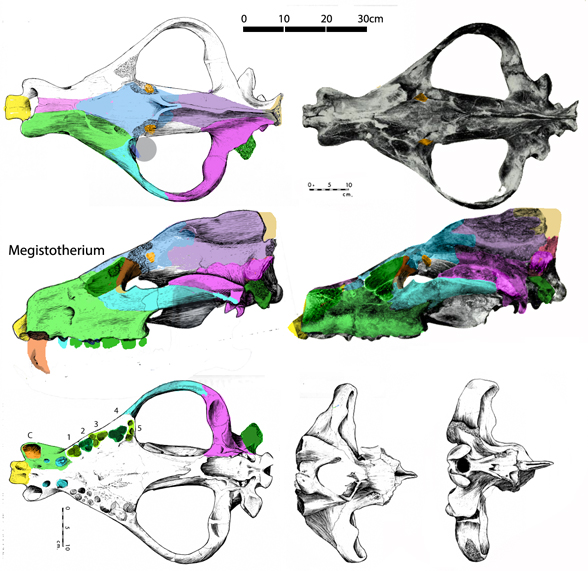
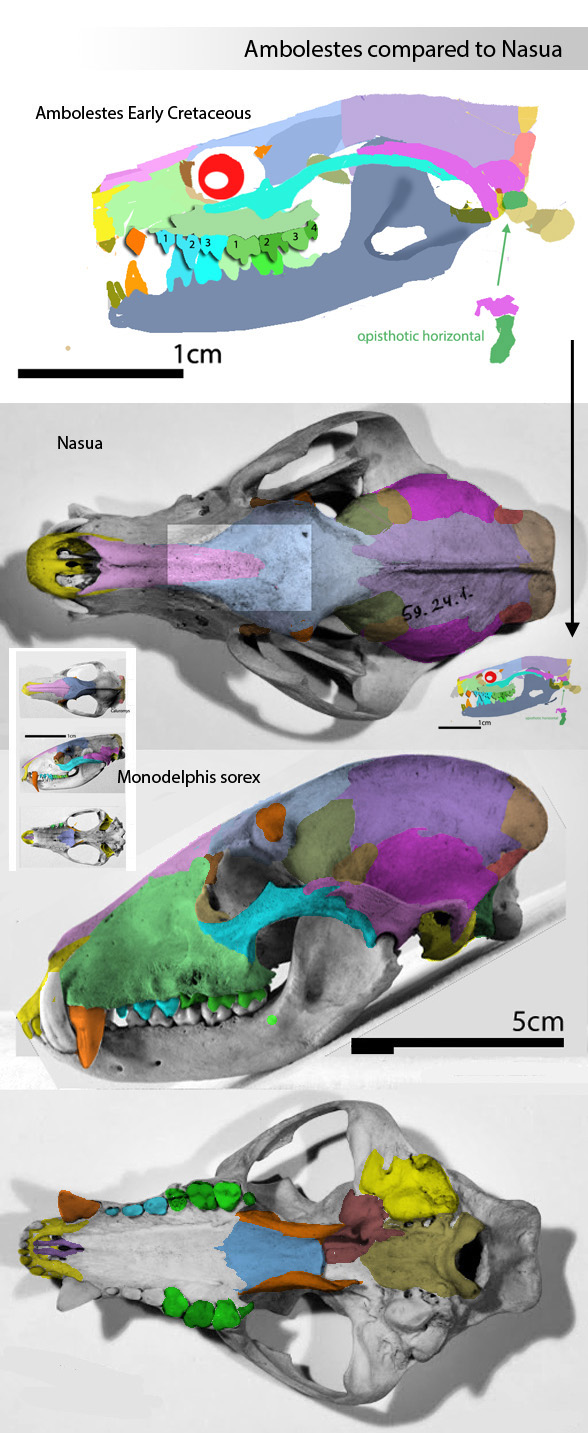
Megistotherium osteothlastes (Savage 1973; Miocene, 23mya; 66cm skull length) was originally considered a giant hyaenodontid creodont. After rescoring this taxon, here it nests with the much smaller, extant coatimundi, Nasua. The jaw muscles were enormous filling the high cranial crest. The large diameter canines were housed in large, laterally expanded maxillae. The brain case was narrow. The fragile postfrontals appear to have broken off. The premaxillae each include room for only one tiny tooth, if not absent altogether. A key trait is the posterior extension of the palatine far beyond the tooth row, a trait common to this clade. The fragile otic bulla = ectotympanic is missing here, perhaps via taphonomy, so was scored with a '?' rather than 'bulla absent'.
The great size of Megistotherium vs the much smaller size of Nasua – and the changes that inevitably happen with Cope's Rule – seem to be the reason why these two taxa have remained phylogenetically separated until now. |