Audebert JB 1799. Histoire Naturelle Des Singes Makis. Paris:
Desray.
Boddaert P 1768. Dierkundig Mengelwerk in Het Welke de Nieuwe of nog Duistere Zoorten Van Dieren. Volume 2. Abraham van Paddenburg en J. Van Schoonhoven.
Gmelin JF 1788. Caroli a Linné systema naturae per regna tria naturae, secundum classes, ordines, genera, species, cum characteribus, differentiis, synonymis, locis. Tomus I. Editio decima tertia, aucta, reformata. - pp. [1-12], 1-500. Lipsiae. (Beer).
Jackson SM and Thorington RW Jr 2012. Gliding mammals. Taxonomy of living and extinct species. Smithsonian Contributions to Zooloogy 638: 117 pp.
Linnaeus C 1758. Systema naturæ per regna tria naturæ, secundum classes, ordines, genera, species, cum characteribus, differentiis, synonymis, locis. Tomus I. Editio decima, reformata.
Ogilby W 1838. Proc. Zool. Soc. Lond., 1838: 6. Type Locality: Zanzibar (designated by Thomas, 1917 b:48) .
Thomas O 1908. The Nomenclature of the Flying Lemurs. Annals and Magazine of Natural History, 8th ser., 1:252–255.
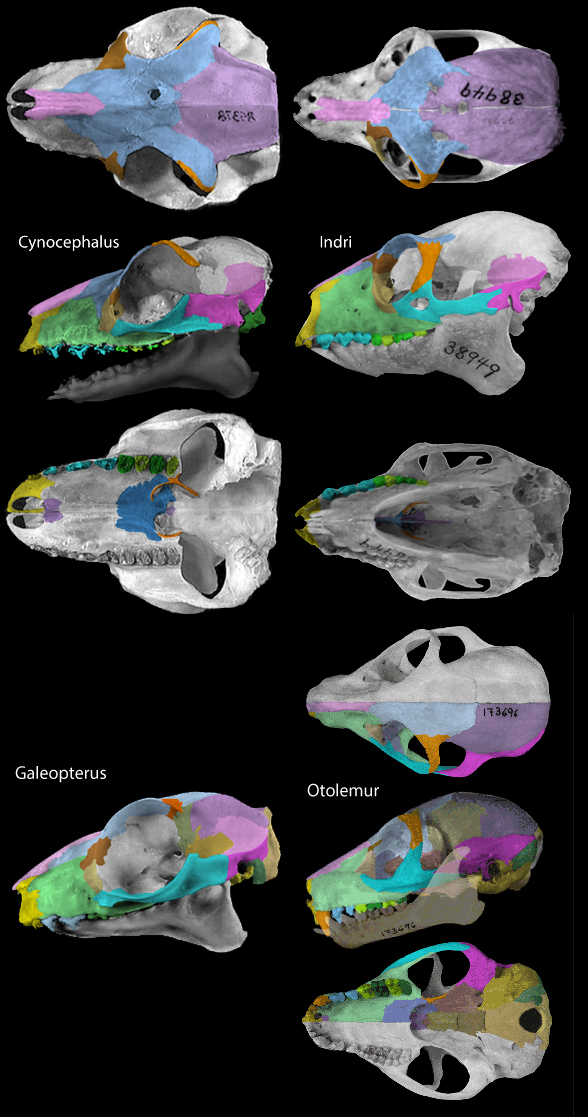
wiki/Cynocephalus
wiki/Galeopterus
wiki/Indri
wiki/Otolemur
|