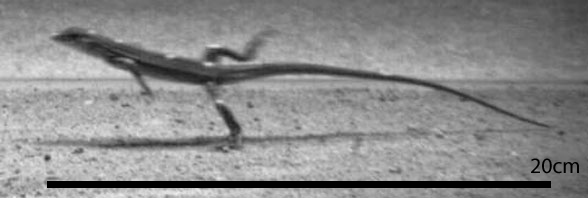
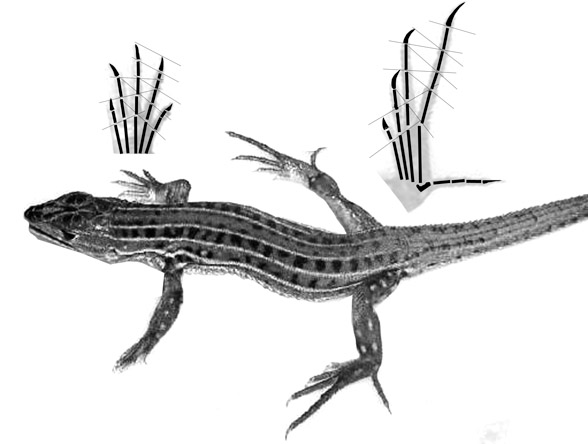
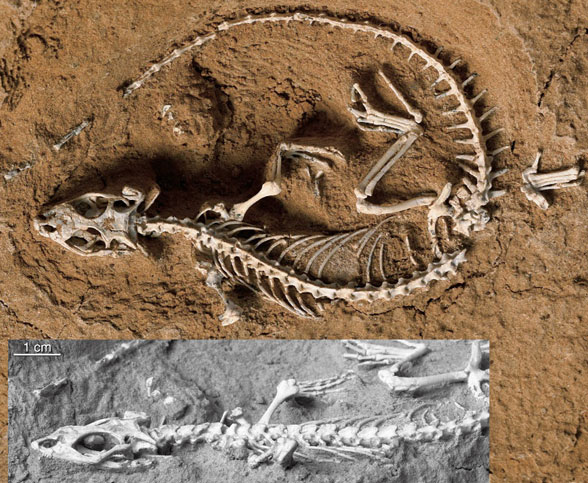
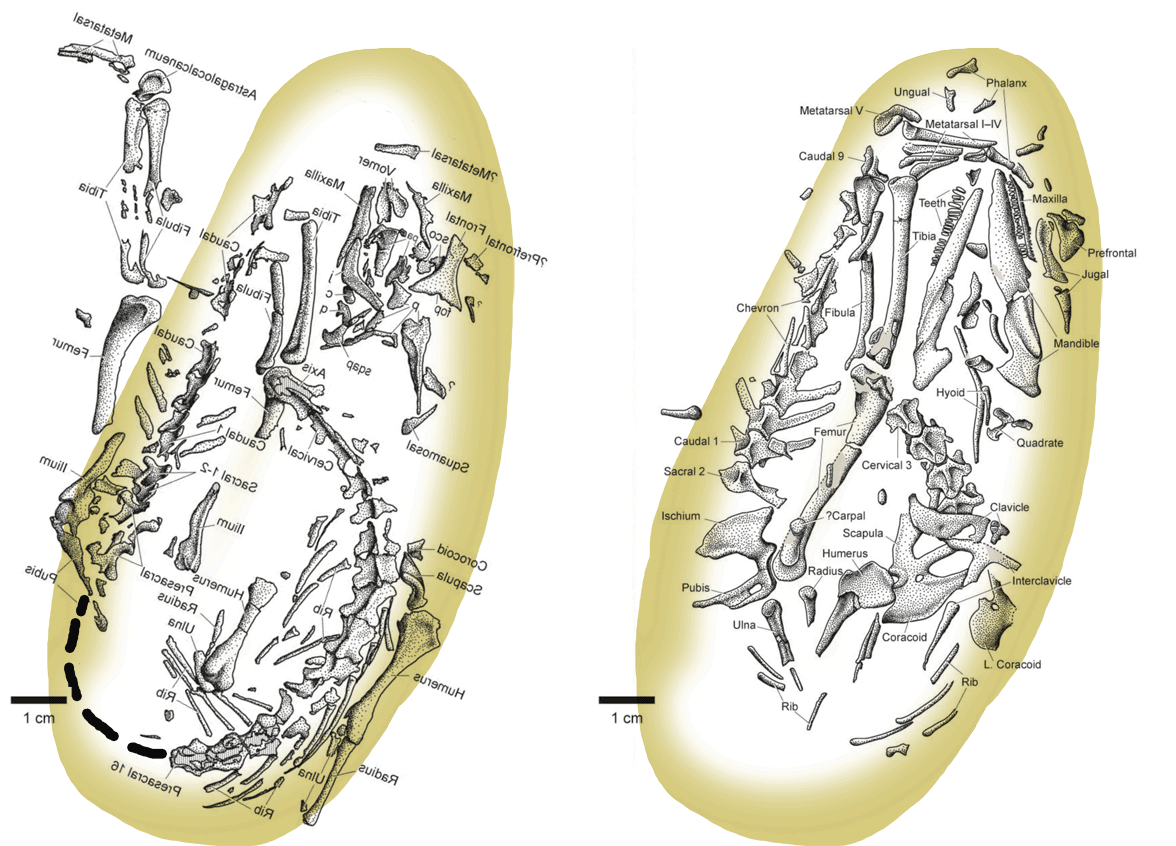
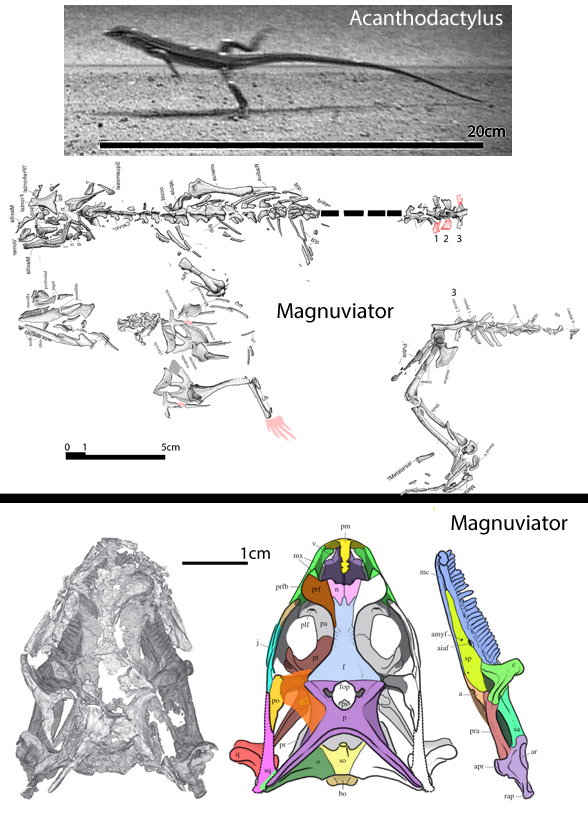
Acanthodactyus erythrura (originally A. lineomaculatus Merre 1820) extant, commonly referred to as a fringe-fingered lizard, is a basal member of the clade that includes Tupinambis and Eolacerta. It was derived from a sister to Liushusaurus.
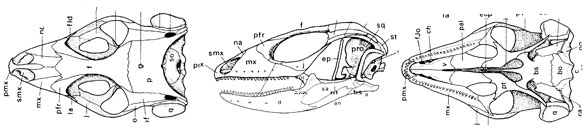
Distinct from Liushusaurus, the skull of of Acanthodactylus is shorter with larger orbits, as befitting its reduced size. The parietals are flatter and wider, reducing the upper temporal fenestra to specks. The postfrontal also extends posteriorly to fill the former gap. The rostrum is shorter. The naris is larger. The teeth are small, like those in Eolacerta. The retroarticular process angles down. The internal nares are mere slits against the maxillae. The basisphenoid is greatly enlarged.
There are a variety of Acanthodactylus species. The number of presacral vertebrae ranges from 23 to 27. A lumbar region is present of reduced to absent posterior dorsal ribs. Sternum present. Clavicle expanded medially with a large fenestra so the clavicle forms an uninterrupted loop. Interclavicle cruciform. Caudal vertebrae have two pairs of transverse rib. Capable of bipedal locomotion. |